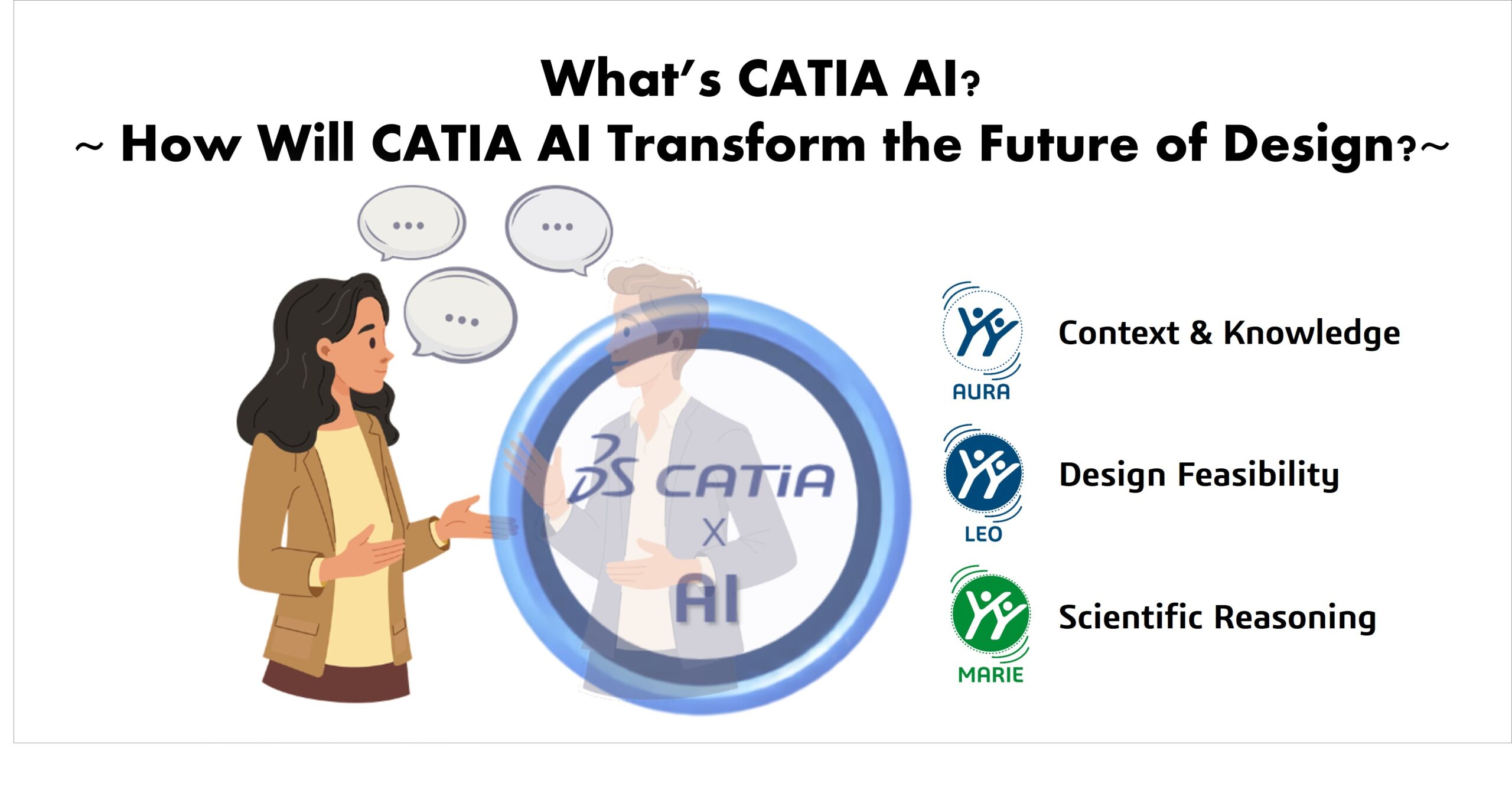

Dassault Systèmes, the developer of CATIA, is exploring this possibility through 3DEXPERIENCE CATIA on Cloud, with the aim of using AI not simply as a chatbot, but as a technology that can support engineers in their day-to-day design work.
Today, we’ll look at the direction CATIA AI is heading and how it could change the way engineers approach design in the future.

We hear a lot about AI these days, but I’m still not sure how it could be used in actual design work.
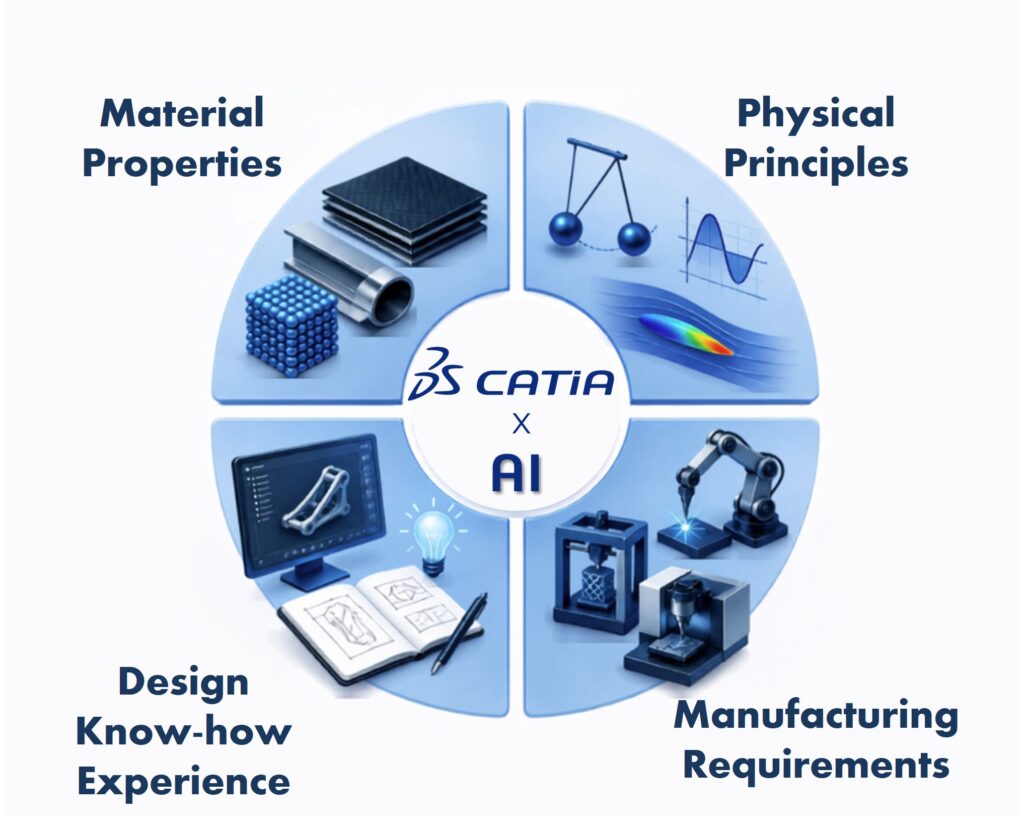
Generative AI is already good at creating things like text and images. But engineering design requires much more, including Material Properties, Physical Principles, Manufacturing Requirements, and Design know-how and Experiences.
The idea behind CATIA AI is to use this kind of information and knowledge to help engineers make better design decisions.
I see. So, what kind of design work could CATIA AI actually help with?
There are three areas that are attracting particular attention:
[Three Areas Where CATIA AI Could Make a Difference]:
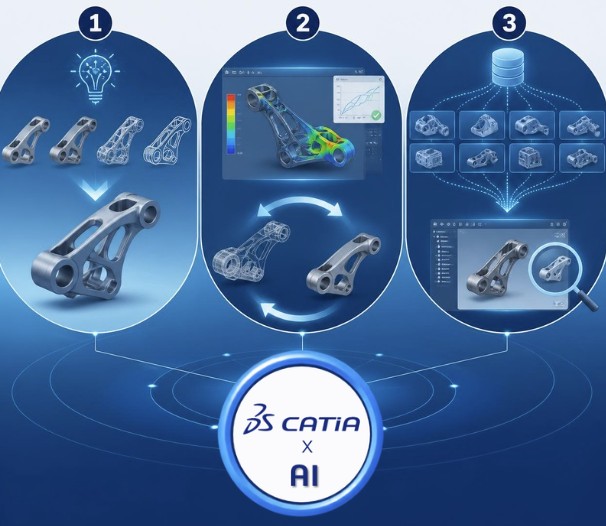
① Generating Design Concepts
② Checking Designs and Managing Design Changes
③ Reusing Existing Design Knowledge
① Generating Design Concepts
Traditionally, engineers start by considering different design concepts based on their experience and knowledge. They then create a model and move on to analysis and evaluation.
With CATIA AI, the idea is to generate multiple design options based on specified requirements and constraints. Engineers can then compare the options and select the one that best meets their needs.

So engineers could start with several design options instead of starting from a blank screen.
Exactly. This could allow engineers to spend more time evaluating alternatives, refining designs, and making engineering decisions, rather than creating geometry from scratch.
② Checking Designs and Managing Design Changes

In our day-to-day work, dealing with design changes can be a real challenge.
Absolutely.
In many development projects, the difficult part isn’t necessarily creating the initial design. It’s understanding what happens when something changes.
CATIA AI is expected to help engineers identify potential impacts and issues earlier in the design process. For example:
- Supporting modular design by finding similar modules and design patterns from previous projects.
- Checking the impact of design changes and their impact on related components and 3D geometry.
- Supporting tolerance definition based on component function and design requirements.

That could help engineers make better decisions earlier, reduce rework, and ultimately shorten development time while improving manufacturing and quality.
③ Reusing Existing Design Knowledge
Another challenge for us is how to pass the knowledge and experience of senior engineers on to the next generation.
That’s an important issue for many companies.
A lot of valuable engineering knowledge is built up through years of experience. But that knowledge isn’t always easy to capture or share. In some cases, even the reasons behind past design decisions remain with the individual engineer who made them.
CATIA AI is expected to help make better use of this accumulated knowledge.
By drawing on past design data and best practices, it could help engineers find similar design examples, identify relevant operations, and highlight important design considerations when they need them.
So, instead of staying with individual engineers, that experience could become a reusable asset for the entire organization.
[From “Using CATIA” to “Working with CATIA”]
A Future Where CATIA Becomes a Design Partner
From “Using CATIA” to “Working with CATIA”
When we hear “CATIA AI,” we tend to think about things like AI generating geometry or automating design tasks.
That’s certainly one part of the picture.
But the bigger idea is to explore a future where CATIA AI can also support engineers as they research, check, and make decisions during the design process.
What do you mean by that?
Think about how engineers actually work.
Design isn’t just about creating 3D models. A significant amount of time is spent researching, checking, and making decisions.
For example:
- “Have we designed something similar before?” → Search through previous design examples.
- “Will this change affect any other components?” → Check the relevant design rules. → Ask an experienced engineer.
- “Could this cause problems during manufacturing?” → Check the potential manufacturing impact.
That’s true. We spend a lot of time looking things up and checking our designs, not just working in CAD.
Exactly.
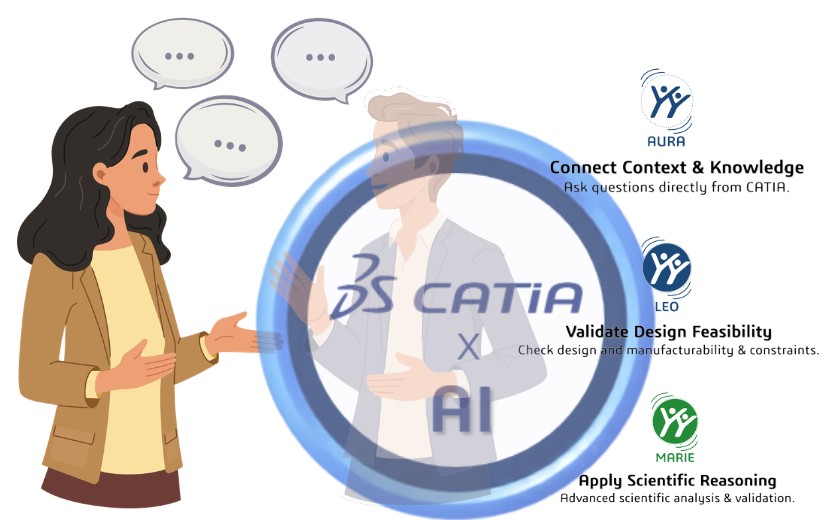
Imagine being able to ask CATIA AI questions in the same way you would ask a colleague:
“Have we done something similar before?”
“Does this design comply with our internal design rules?”
“Do you see any potential manufacturing issues?”
In the future, CATIA AI could use your design data and internal knowledge to provide relevant answers, examples, and suggestions.
So rather than simply using CATIA as a CAD tool, engineers could interact with it more like a colleague while working on their designs.
[In the AI Era, the Real Advantage May Be Creating the Right Environment for AI]
AI is evolving rapidly. When it becomes even more capable, the companies that achieve the greatest results may not simply be those that adopt AI, but those that have already created an environment where AI can actually deliver value.
AI cannot create a company’s unique engineering know-how out of thin air.
For AI to provide useful, company-specific support, it needs something to work with: past design data, the reasoning behind design decisions, manufacturing knowledge, and other forms of engineering expertise.
That’s why it is important to build and maintain the data and knowledge that AI can learn from and make use of.
I see. So the key isn’t simply adopting AI. It’s creating an environment where AI can make effective use of our own data and expertise.
That means:
- Building up a reliable base of design data
- Capturing design intent and the reasoning behind decisions
- Making past knowledge available for reuse
- Connecting design and manufacturing data
Exactly.
I’m looking forward to seeing how CATIA AI evolves and how it could change the way we work in design.
Please contact us.