
We specialize in structural machining for press dies.
In structural machining, CAM engineers must handle many time-consuming tasks, including:
- Defining machining features
- Selecting cutting tools
- Planning machining sequences
- Checking for tool interference
- Creating NC programs
As solid models become the standard in die design, the volume and complexity of machining data continue to increase.

How can we reduce CAM workload, standardize operations, and pass on valuable machining know-how?
This has become one of the biggest challenges facing the press die industry today.

To address these challenges, we would like to introduce CAM-STRUCTURE, the structural machining CAM system for CADmeister.
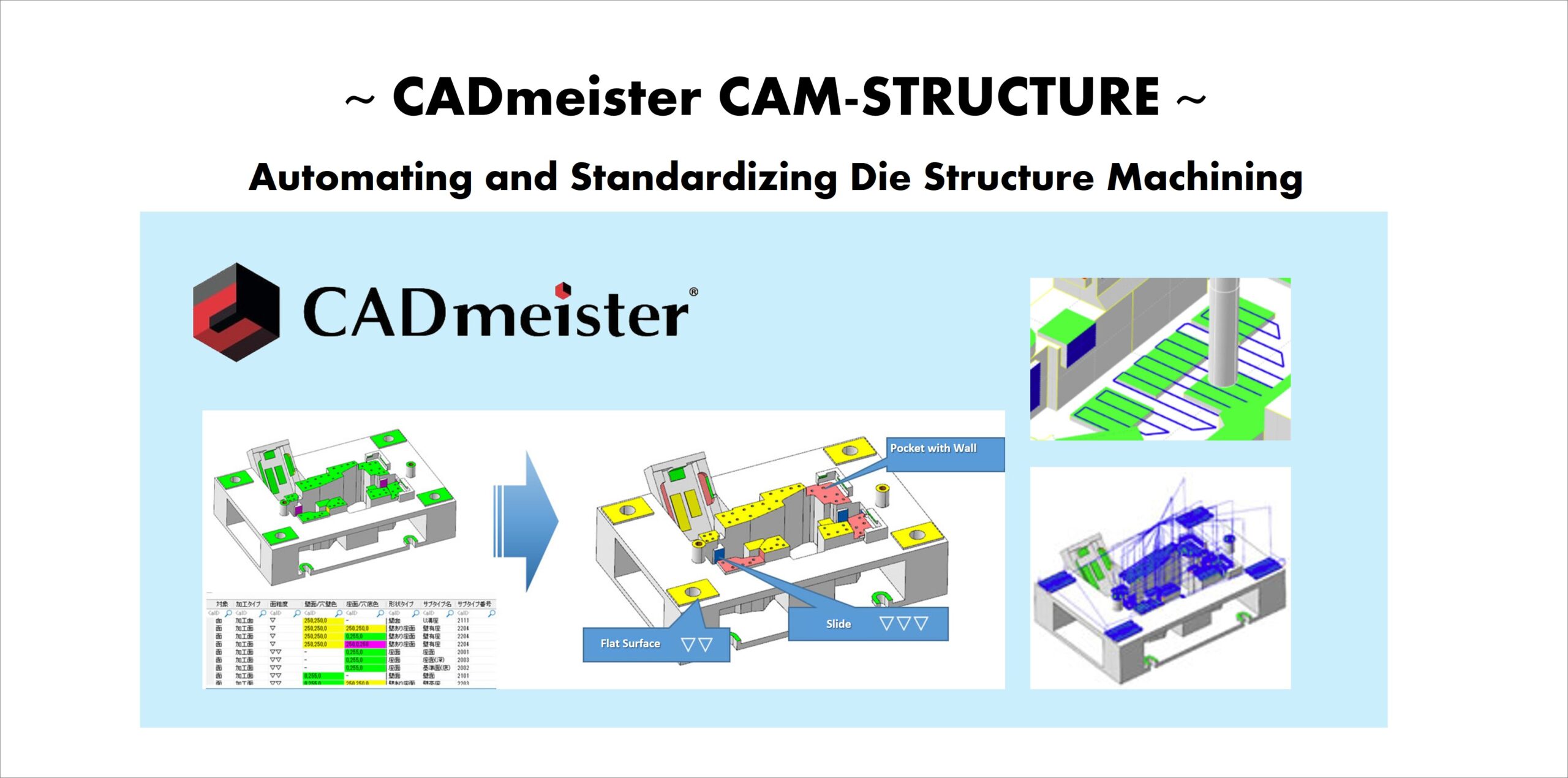
CAM-STRUCTURE is an automated CAM solution that automatically recognizes machining features from the model and generates safe and highly efficient tool paths based on a knowledge database that captures your machining know-how.
It helps manufacturers achieve:
- Automatic creation of machining features
- Automatic machining condition setup
- Optimized machining sequences
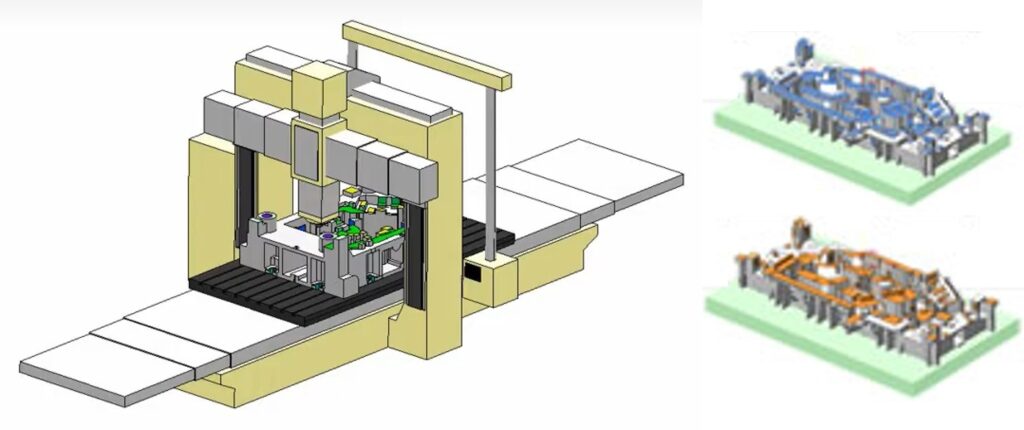
- Support for unattended 5-axis machining
By automating and standardizing CAM operations, CAM-STRUCTURE improves productivity and reduces dependence on individual experience.
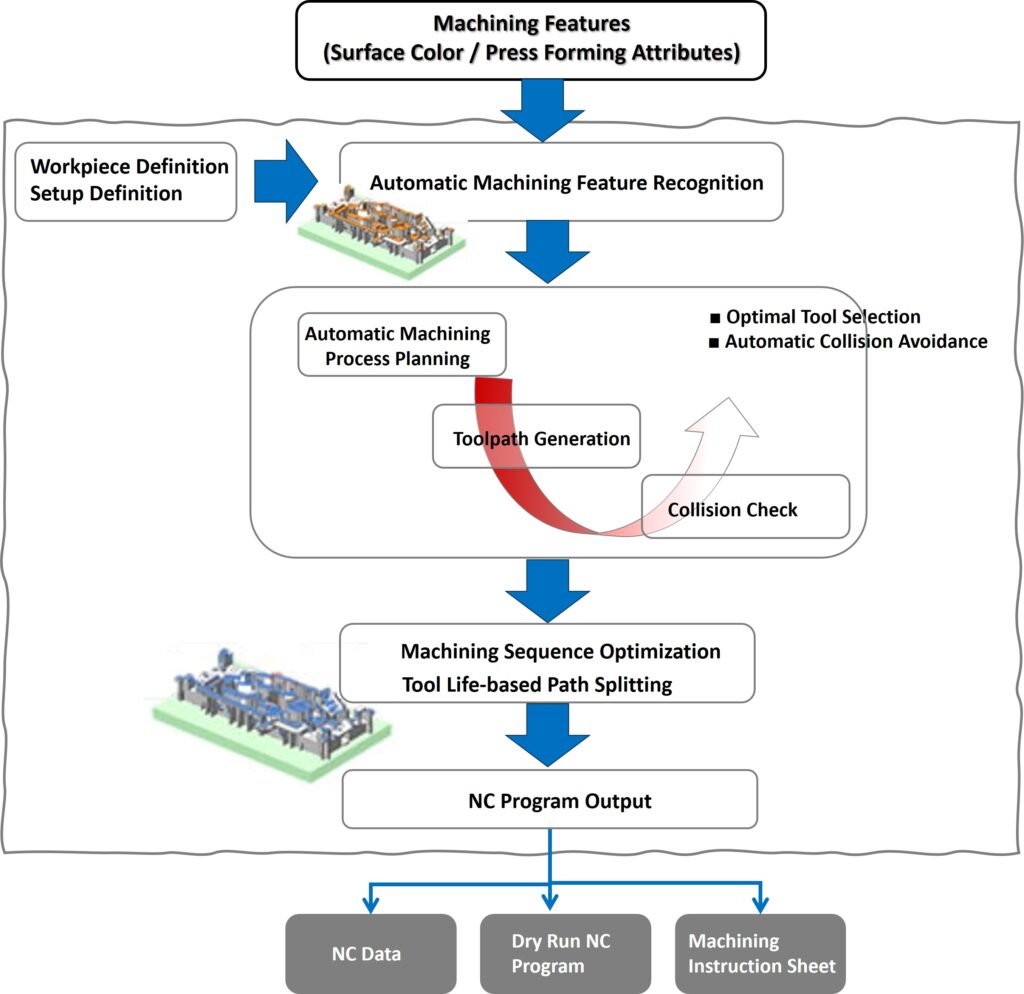
[What CAM-STRUCTURE Can Do]:
- Automatic creation of machining features
- Digitalization of machining know-how
- Reduced waste through optimized machining sequences
- Support for unattended 5-axis machining
1. Automatic Creation of Machining Features
In structural machining, defining machining features, assigning machining attributes, and preparing NC data require a significant amount of CAM work.
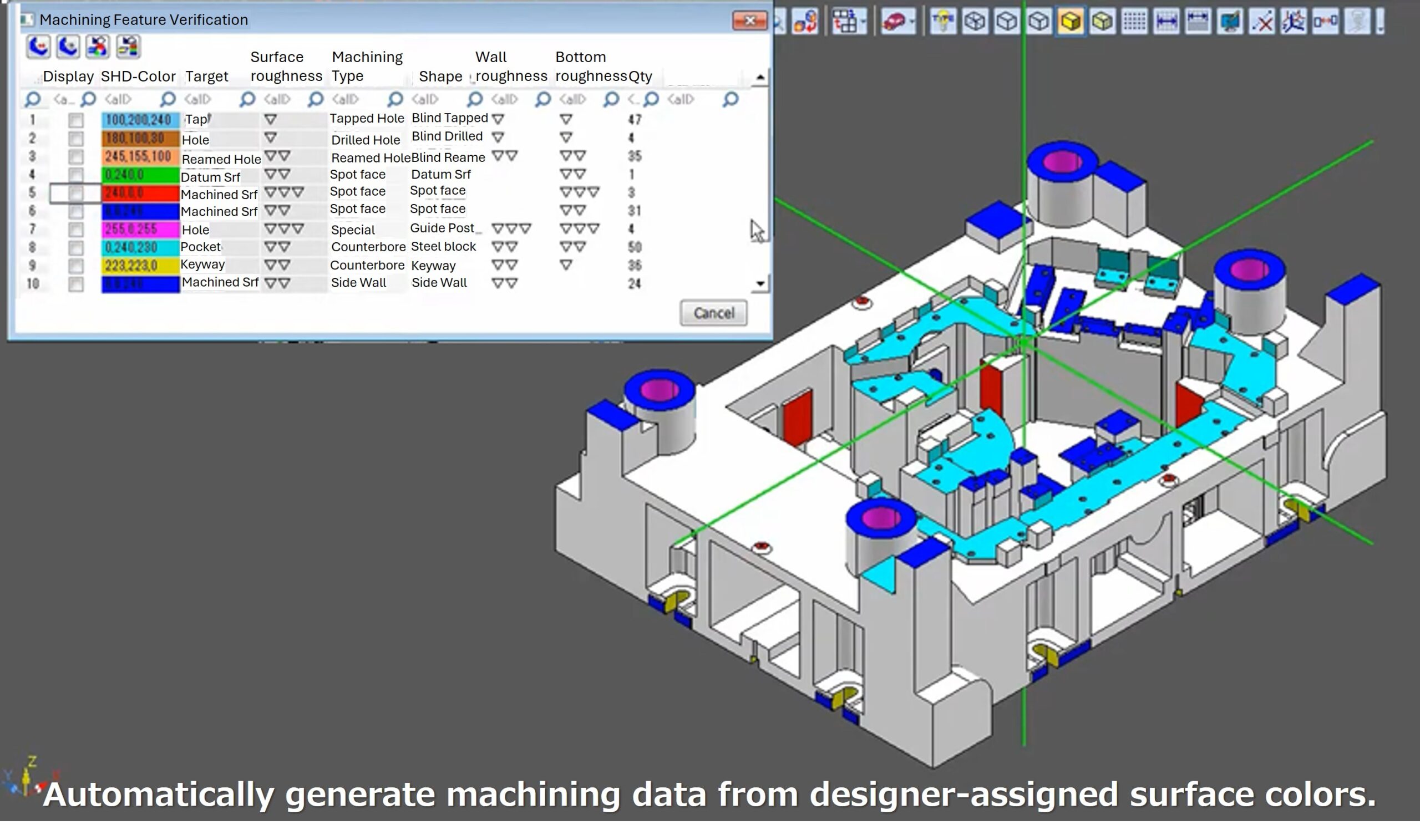
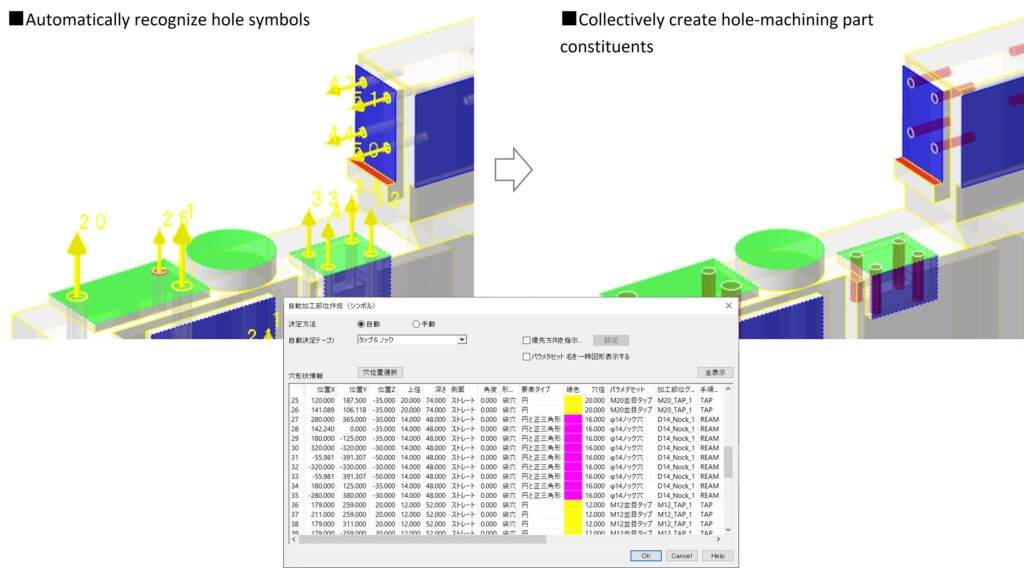
CAM-STRUCTURE can automatically recognize machining features based on face colors and model geometry.
For example, it can:
- Assign machining attributes automatically using RGB face colors
- Create multi-direction hole features from hole symbols and color information
- Manage machining areas, stock allowance, and machining process information as machining features
This allows smooth integration with downstream CAM operations.

That should help reduce CAM workload and improve standardization.
2. Digitalization of Machining Know-How
Machining conditions and tool selection often depend on the experience of individual engineers.
CAM-STRUCTURE uses a knowledge database to automatically determine machining conditions, helping to automate and standardize CAM operations.
This can help:
- Reduce NC preparation time
- Improve efficiency for mirror-shape machining
- Convert manual machining processes into digital data
By digitalizing and standardizing your company’s machining know-how, CAM quality becomes more consistent.
The system can also automatically generate tool paths with interference avoidance while considering the surrounding geometry.
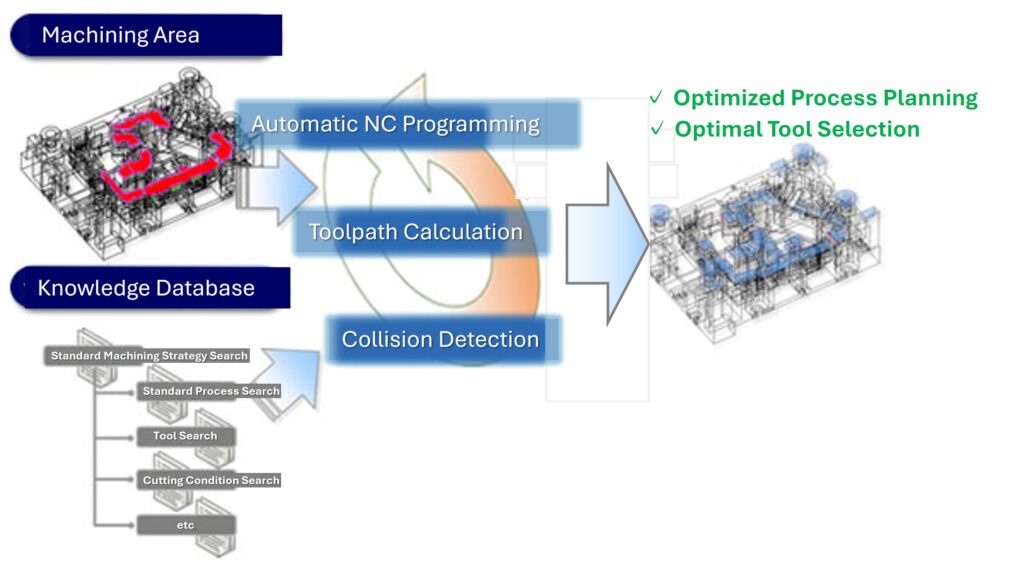
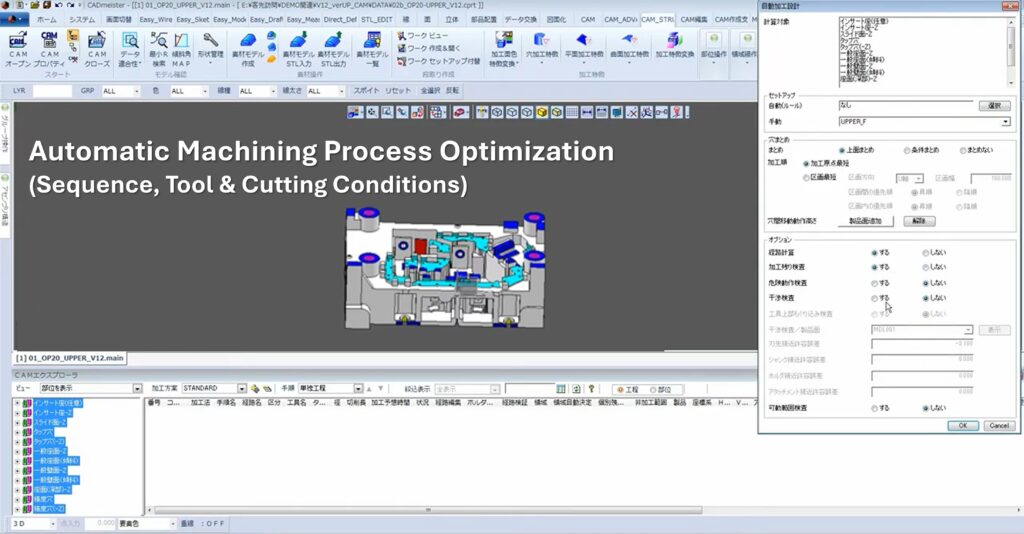
That should reduce dependence on individual skills while maintaining stable machining quality.
3. Reduce Waste with Optimized Machining Sequences
We want to reduce machining time and minimize tool changes.
CAM-STRUCTURE automatically optimizes:
- Machining sequences
- Tool change sequences
according to predefined rules.
It can also automatically merge nearby machining features with the same machining attributes, reducing unnecessary air cutting and rapid movements to create more efficient tool paths.

That should help shorten cycle times and reduce tool wear.
4. Support for Unattended 5-Axis Machining
Safe unattended 5-axis machining remains a major challenge for many manufacturers.
CAM-STRUCTURE supports the following functions:
- Interference avoidance
- Air-cut optimization
- Operation splitting based on tool life
These capabilities help enable safe unattended 5-axis machining.
This enables higher machine utilization and helps reduce operator workload on the shop floor by automating processes that previously required manual supervision.
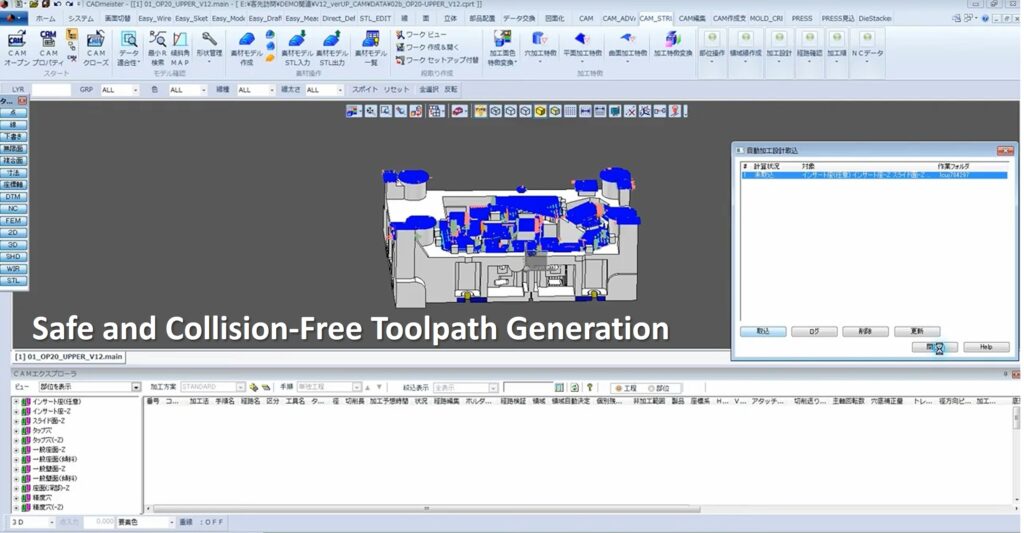
This can also help increase the utilization of machines that were previously idle at night.
CAM-STRUCTURE delivers higher productivity, effective skill transfer, and reduced reliance on individual expertise, enabling full standardization and automation of structural machining processes.
Please contact us.